

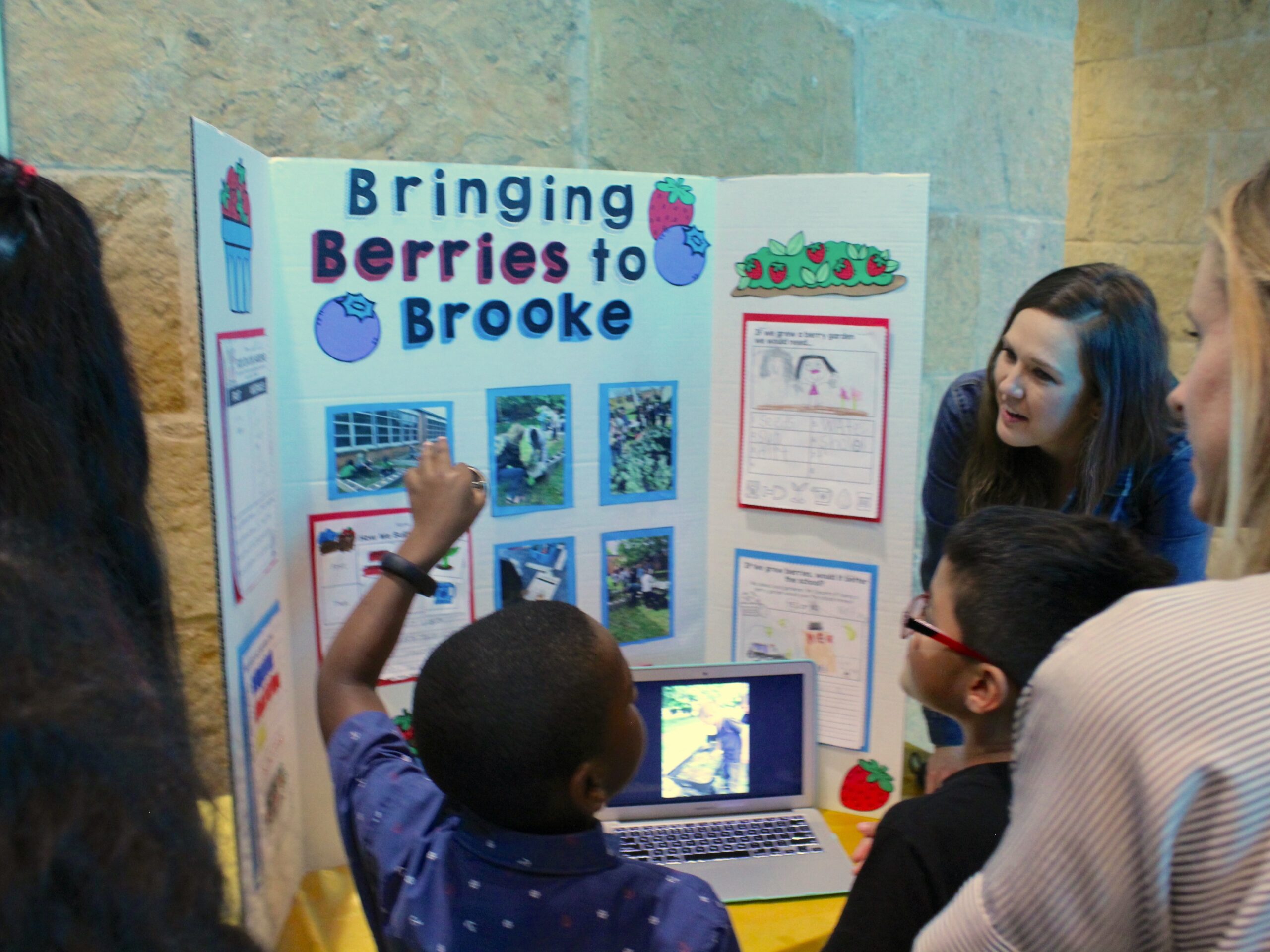
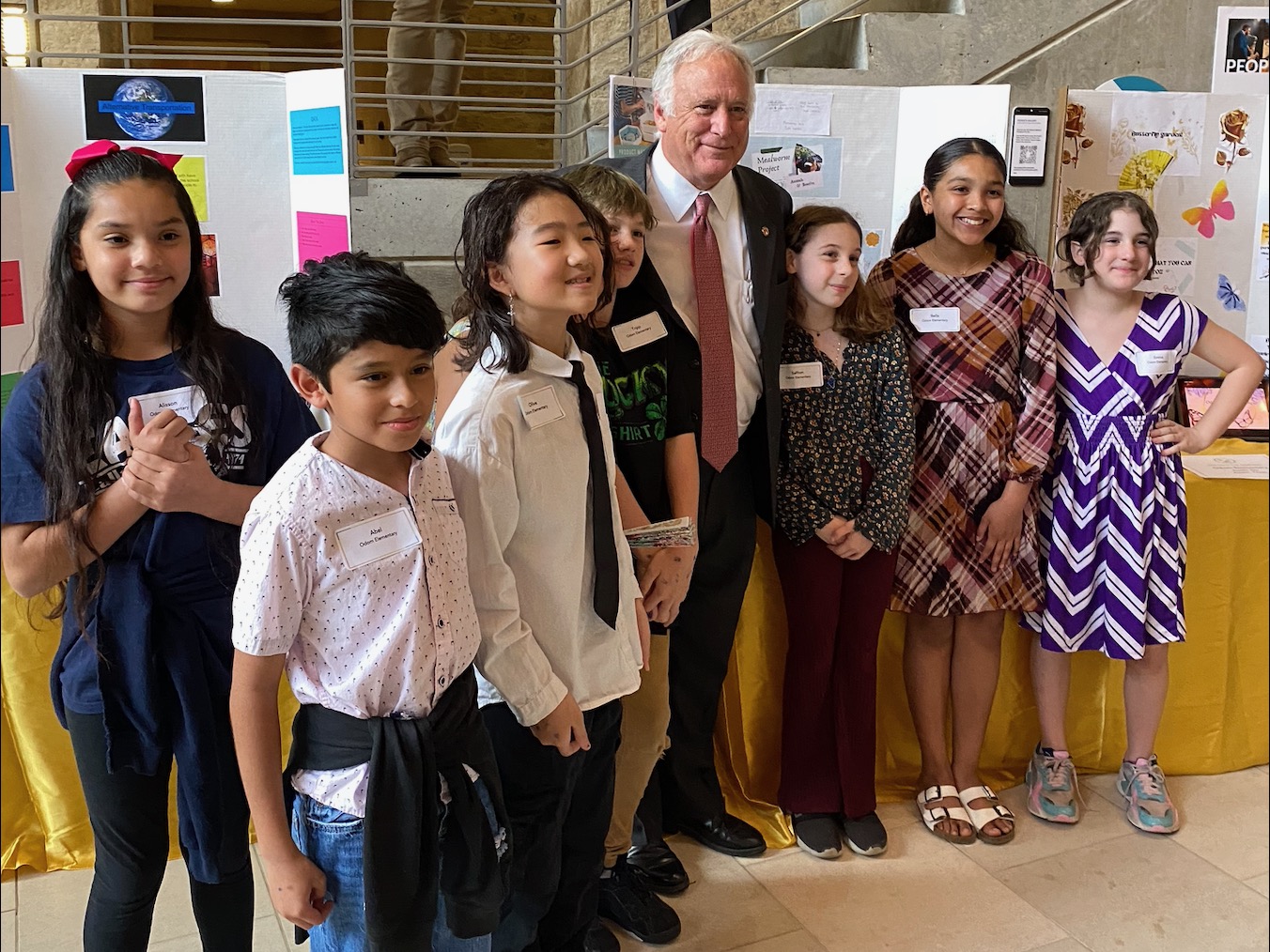
Over a decade ago, a group of Austin students walked into City Hall, not as visitors, but as problem-solvers. They set up poster boards, opened their laptops, and spent the evening teaching adults about the actions they are taking on real environmental issues they uncovered at their schools. This culminating event happens every spring, and this year, on May 14, 2026, the community gathered to witness what a decade of youth sowing seeds of sustainability has grown into.
The 10th Annual Central Texas Student Innovation Showcase is more than an end-of-year celebration, it’s the stage where Student Innovation Fund grant recipients get to show off their creativity and real-world impact. Since 2015, EcoRise and Austin Climate Action and Resilience have partnered to bring this experience to K–12 students across the Austin metro, creating a consistent, community-rooted pipeline for youth-led sustainability work. It starts the same way every year: students learn to look at their school communities differently—not as passive participants, but as researchers, designers, and advocates.
Over the past decade, EcoRise has awarded more than half a million dollars in Student Innovation grants across the U.S. 285 Central Texas student teams have put $131,000 of that to work on their campuses, improving 560,000 square feet of public space, growing more than 24,000 pounds of food, and saving over a million gallons of water.
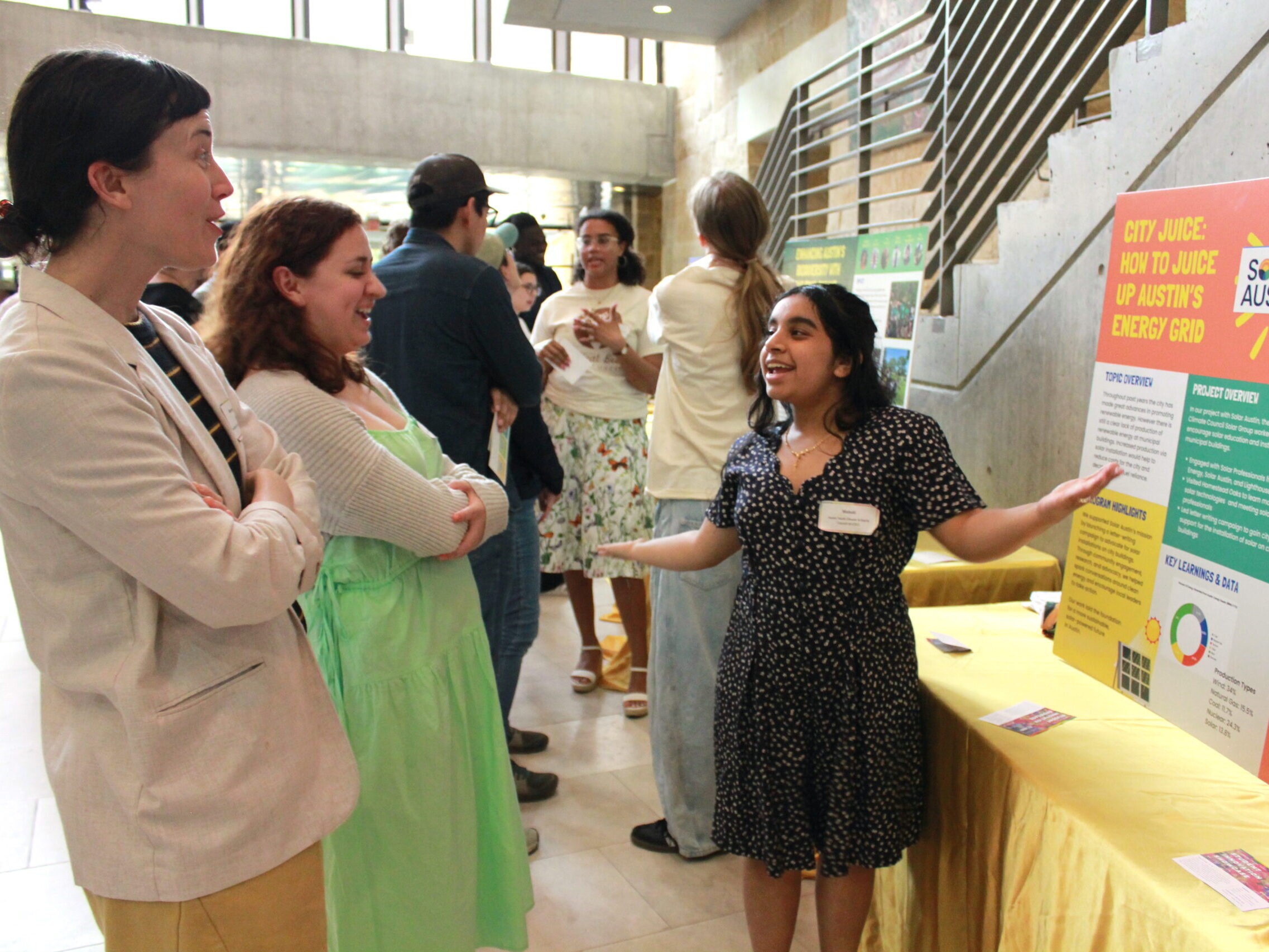
“Elevating youth voices is such a critical part of climate action. The projects that have come from this partnership show what’s possible when you let students take the lead.”
– Zach Baumer, Director of Austin Climate Action and Resilience
This year’s Central Texas cohort is no exception. “Even though helping the community or the environment may seem really big and almost impossible, pursuing that goal and putting in effort can lead to success,” said Sean B, a 7th grader at Gorzycki Middle School. “Without serious thought and consideration, part of the school’s structure could break, causing even higher costs for our community.”
The Student Innovation Grant process begins with an Eco-Audit. For students in Teacher Ambassador Alicia Kim’s class at Navarro Early College High School, that meant turning a close eye to their cafeteria. They surveyed their peers and found that 65% throw away at least one plastic utensil every single day. Then they did what good researchers do: they ran the math. Roughly 351,000 utensils disposed of each school year equals 2,320 pounds of plastic waste. They calculated the amount of water and carbon emissions produced for something used once and were alarmed. These students are using their grant to pilot a reusable utensil program, 100 students and teachers this spring. Their hope is that they can not only transform their school cafeteria, but also their classmates’ ideas around waste.
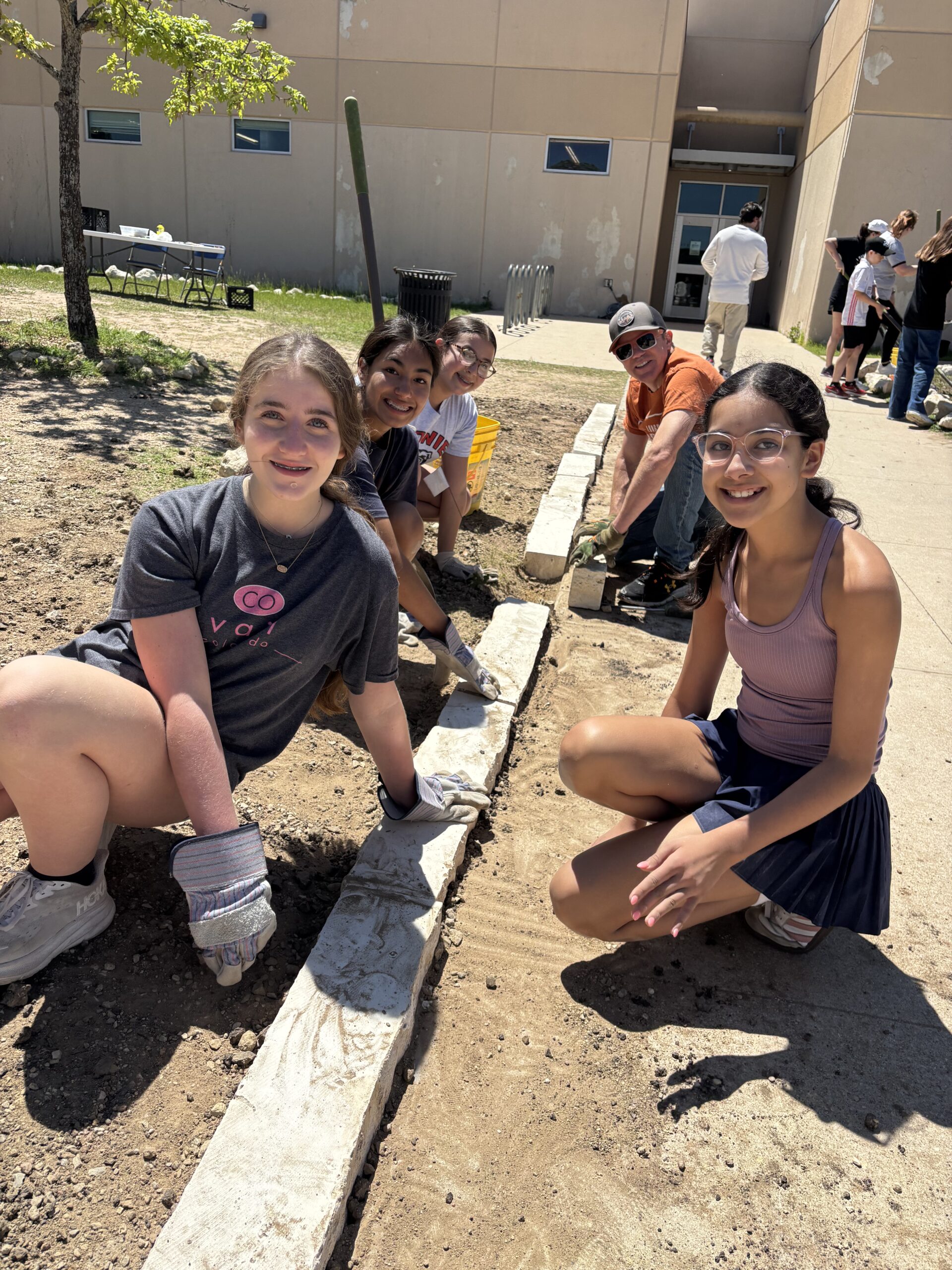
Students laying pavers to improve erosion at Gorzycki Middle School.
At Gorzycki Middle School, students in Joelle Don De’Ville’s class found their issue right beneath their feet. They noticed that the paths their peers wore across campus were slowly eroding the soil. “We counted 78.4 pounds of erosion, which is about the same size as a large dog. In ten years, the erosion will weigh 104 pounds—or as much as an adult cheetah,” 8th grader Finn explained. Finn’s group measured erosion patterns across high-traffic areas, identified where intervention was most needed, and designed a phased plan to stabilize 3,000 square feet of outdoor space. Three Student Innovation Grants totaling $1,590 will fund walkway installation, soil stabilization, and a campus-wide education campaign. These middle schoolers looked at the ground they walked on every day and decided it was worth protecting.
Younger students are asking just as sharp questions. At Odom Elementary, EcoRise Ambassador Teacher Lisa Richardson’s students got curious about a deceptively simple question: why doesn’t anyone use the bike racks? What followed was a real investigation: travel surveys, measurements, and careful thinking about how the placement of a rack shapes whether a student even considers riding to school. Their $700 Student Innovation Grant will fund relocating the rack to the front of campus, incentives for new riders, and a field trip with local bike educators at Ghisallo where students got to learn how to ride for the first time or sharpen their skills.
“The work these students are doing isn’t practice for the real world, it is the real world. They already understand the stakes. Over ten years, that arc, repeated across hundreds of classrooms, adds up to something significant: a sense of agency, a set of skills, and a clear-eyed understanding of what it means to design for sustainability.”
– Elizabeth Harper, EcoRise Senior Program Manager
Ten years in, what’s clear is that the Student Innovation Showcase was never really about the projects. It’s about what happens to a young person when they realize their observations matter, their data is valid, and their community is listening. It’s about what grows when you give students the tools and the trust to lead.
The students and teachers who show up for this work every day are the heart of the Central Texas Student Innovation Showcase, and we’re grateful to the partners who invest in their leadership. Thank you to the Austin Climate Action and Resilience for ten years of collaboration that has deepened and expanded the reach of this work across the Austin metro. And thank you to Austin ISD, Constellation, H-E-B Tournament of Champions, the Mitchell Foundation, and Southwest Airlines for their continued investment in Central Texas students and educators.