
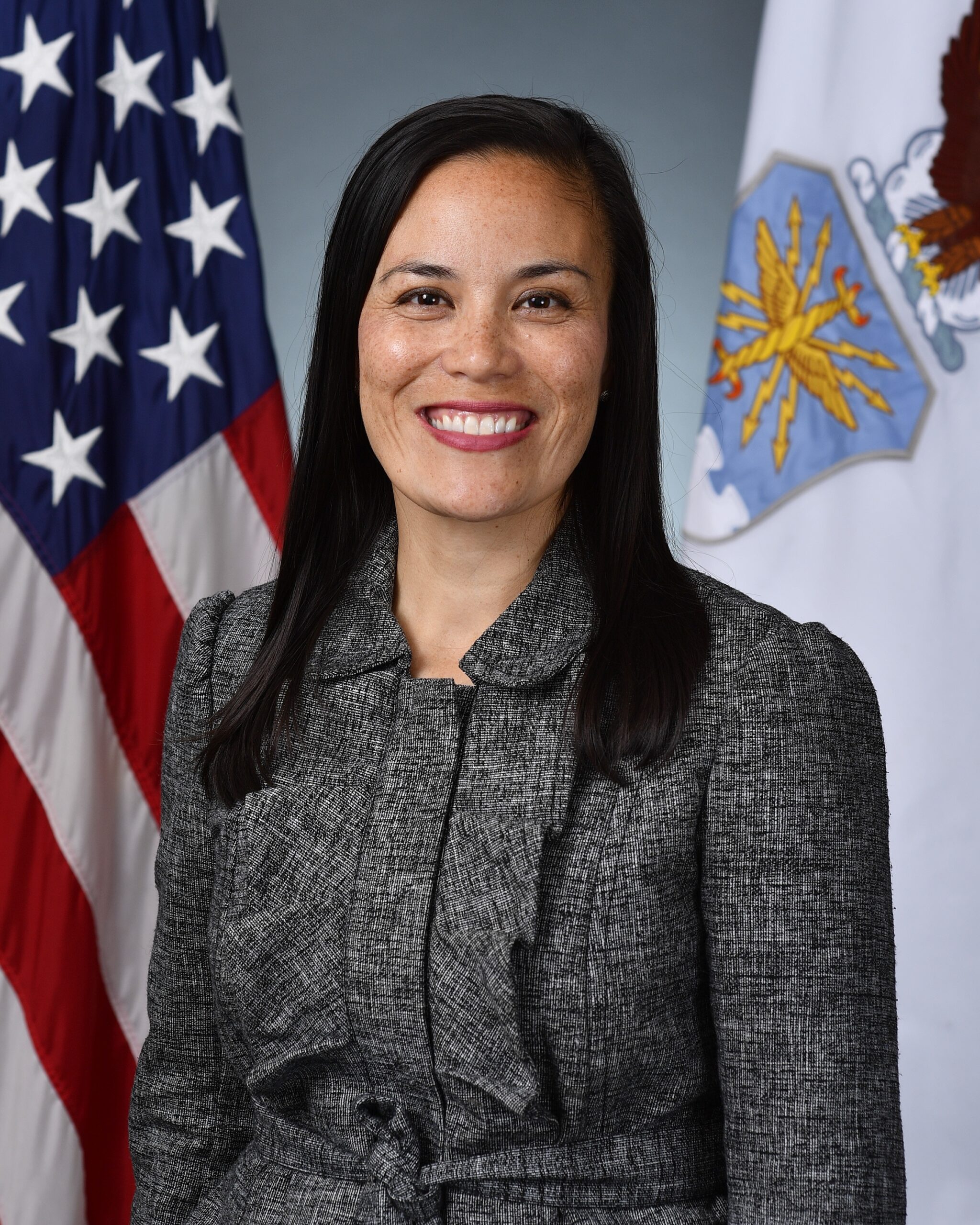
”San Antonio’s youth continue to step up, lead with action, and advance climate resilience across our communities. Through the Youth Climate Council, they are ensuring that our collective response to climate change is timely, reflects the voices and leadership of young people, and helps build a healthy and resilient future for all.
Gina Ortiz Jones, Mayor of the City of San Antonio
Thirty Students and a City’s Climate Plan
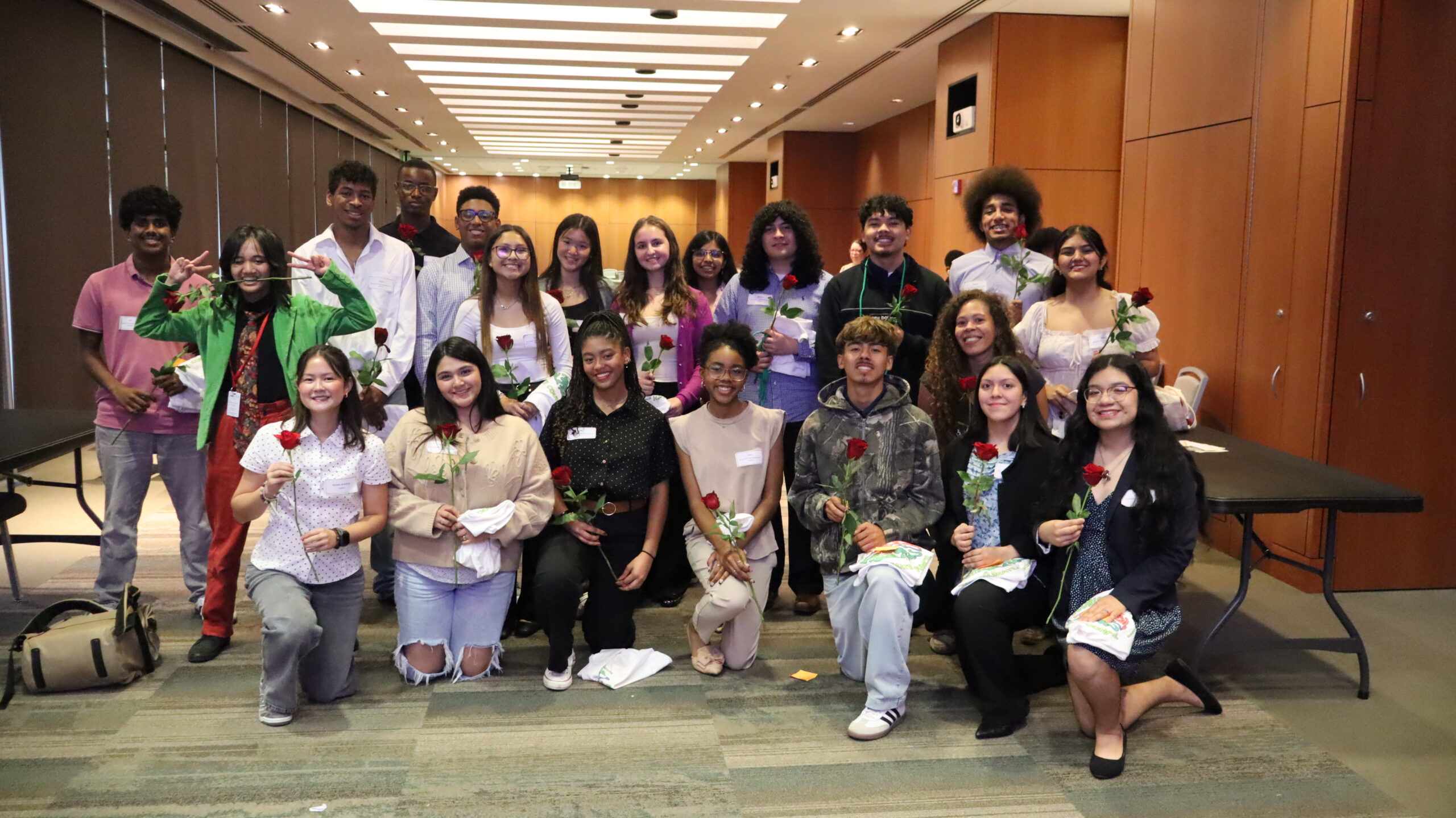
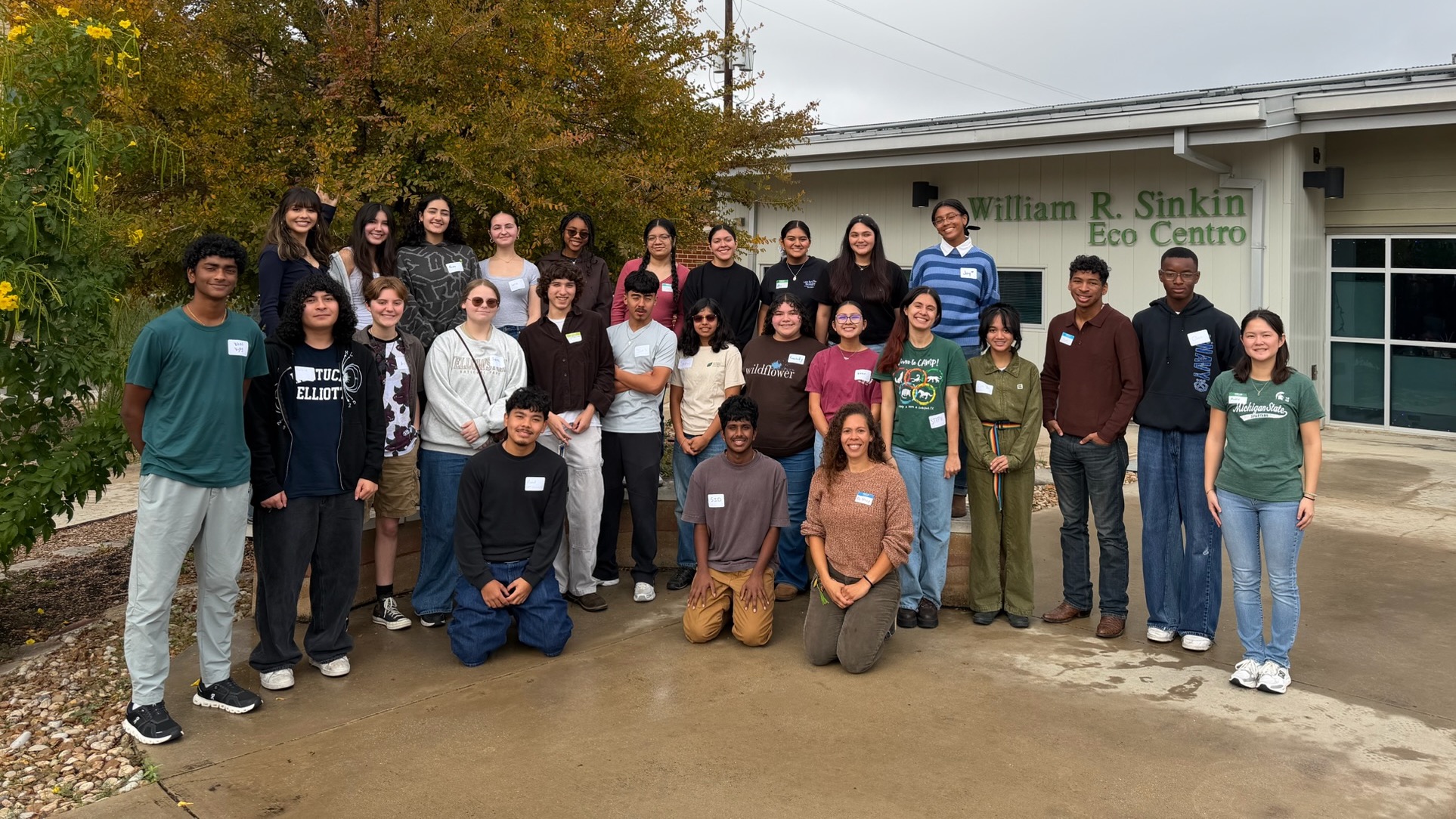
San Antonio’s Climate Action and Adaptation Plan (CAAP) names the city’s climate priorities and maps the path toward resilience. The San Antonio Youth Climate Council spent their school year figuring out their place in the CAAP’s goals and their city’s local climate infrastructure. 30 high schoolers, representing nine of the ten City Council districts and 21 schools, connected with city leaders and grassroot organizations carrying out aspects of the plan and found ways they could add to the work. They earned $15,000 in stipends for the time, ideas, and effort they brought to the work.
The year took them across the city and into rooms most teenagers never get access to. They saw what the plan looks like on the ground: in community gardens, at tabling events, in school districts still running diesel fleets, in neighborhoods where the nearest shade tree is farther away than it should be. They also saw what it looks like further up the chain, sitting down with the City of San Antonio’s Office of Sustainability, San Antonio ISD administrators, and the region’s energy and transportation planners. Every visit sharpened the question each team was trying to answer: what’s our part of this?
“My favorite part was exploring and traveling to diverse sites across San Antonio and learning about how each organization or place contributes to everyone… I loved this since it let me know that there are so many organizations out there that work so hard.”
25–26 San Antonio Youth Climate Council Member
Seven project teams built microinitiatives grounded in the plan’s mitigation and adaptation goals, spanning food access, community health, biodiversity, urban green space, and clean transportation. Two of those teams independently took on the same target from different directions: diesel school buses. The climate technology team partnered with the Alamo Area Council of Governments to get three school districts into an electric bus training session and made the case to district leaders that grant funding to make the switch already exists. The sustainable transportation team worked the same problem from the outside, building an Instagram following and tabling at community events to share research showing electric buses are at least 32% more energy efficient than diesel. Two strategies, one line item in the city’s plan, pushed from both sides at once.
Meet the teams below.
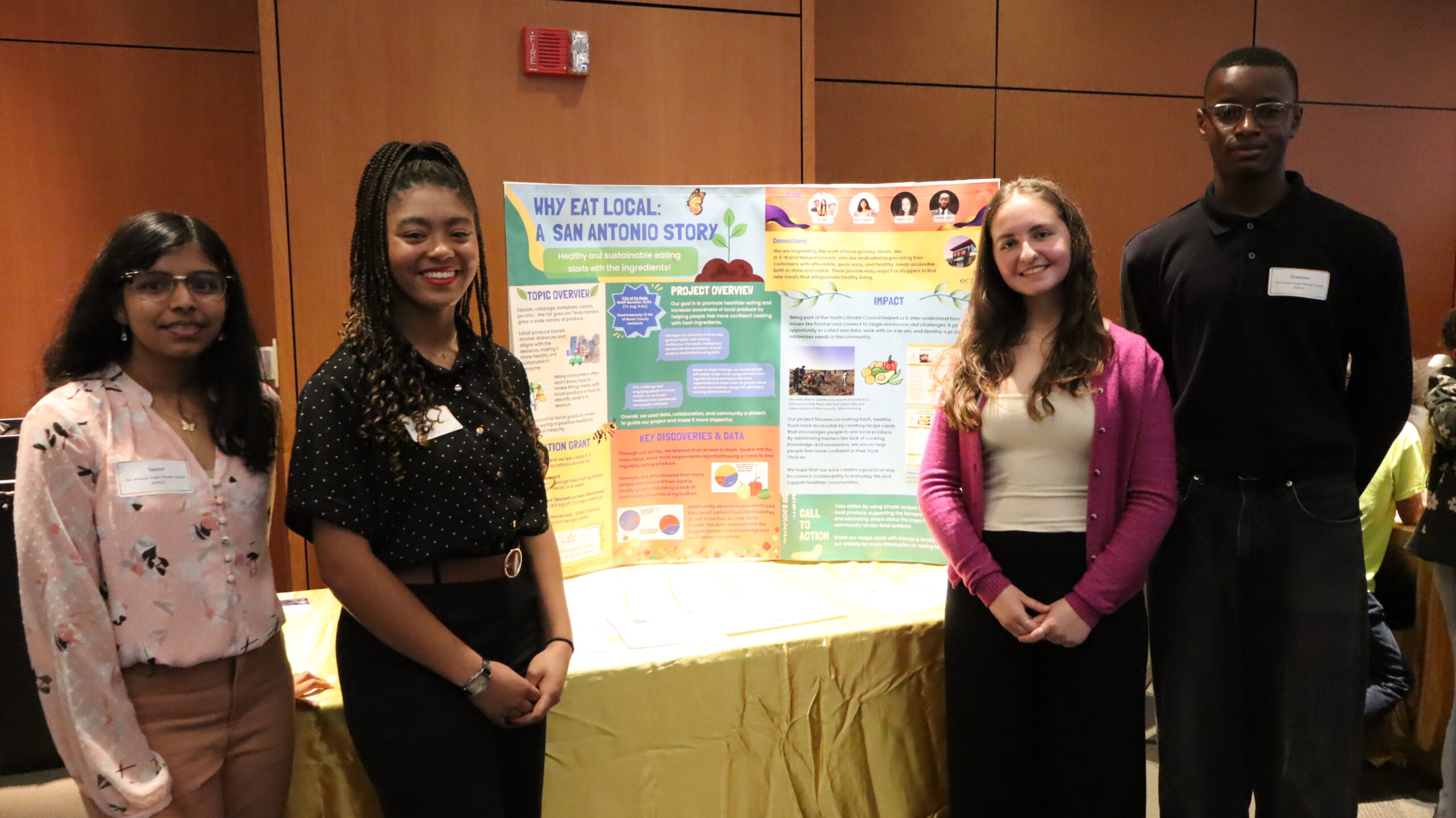
🥬 Bridging the Gap Between Neighbors and Locally Grown Produce
Students on the Food Access & Local Agriculture team investigated why San Antonio residents struggle to connect with locally grown produce, even when fresh food is technically available. After surveying community members and finding that awareness, not access, was the primary barrier, the team used $566.31 in Student Innovation Grant funding to create affordable recipe cards highlighting seasonal, locally sourced ingredients and partnered with grocery stores and farmers’ markets to distribute them. This June, at the San Antonio Food Systems Summit, the team hosted a live cooking demonstration and distributed their cards to attendees, walking away with a $450 donation from the event organizers to continue their work. They estimate their cards can shift the eating habits of more than 200 community members and prevent more than 59,000 kg of CO2 equivalent per year.
This year’s team:
Saanvi (she/her), 17 · Joy (she/her), 16 · Lela (she/her), 15 · Ore (he/him), 16
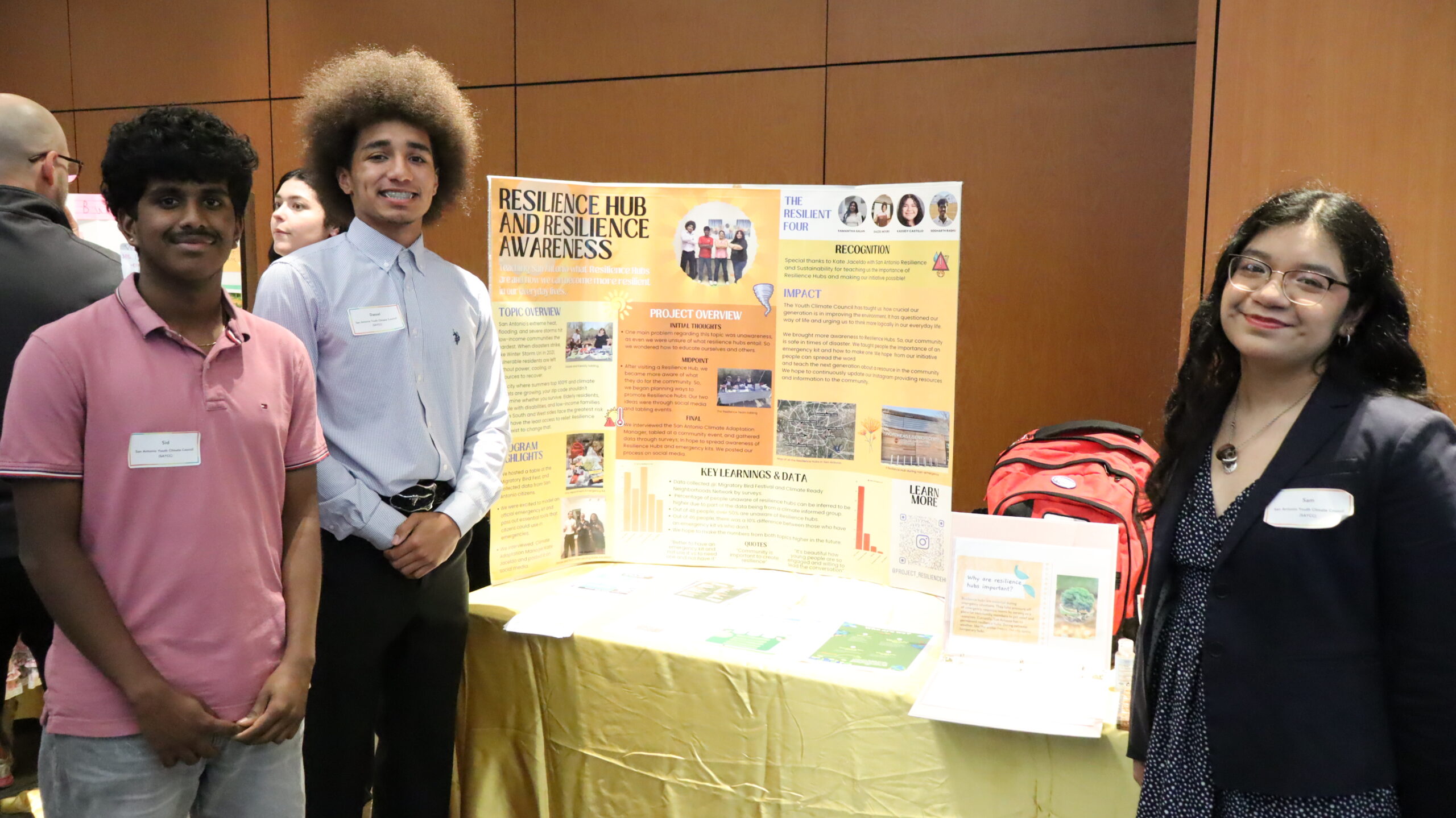
📍 Mapping San Antonio’s Emergency Resources
Starting from a place of genuine curiosity, the Urban Climate Resilience Hubs group set out to make these community resources more visible to San Antonio residents — the team admitted they weren’t sure what resilience hubs were at the outset. After visiting a hub firsthand and interviewing San Antonio Climate Adaptation Manager Kate Jaceldo, the team hosted a table at the Migratory Bird Festival, conducted community surveys, and launched an Instagram page (@project_resiliencehub) to spread the word. Their data found that more than half of the 48 people surveyed were unaware resilience hubs existed, underscoring the urgency of their outreach. The team also modeled official emergency kits and shared information on how community members can prepare for climate-related disasters. Learn more about San Antonio’s Resilience Hubs.
This year’s team:
Sid (he/him), 16 · Dazzel (he/him), 16 · Sam (all pronouns), 16 · Kassidy (she/her), 15 (not pictured)
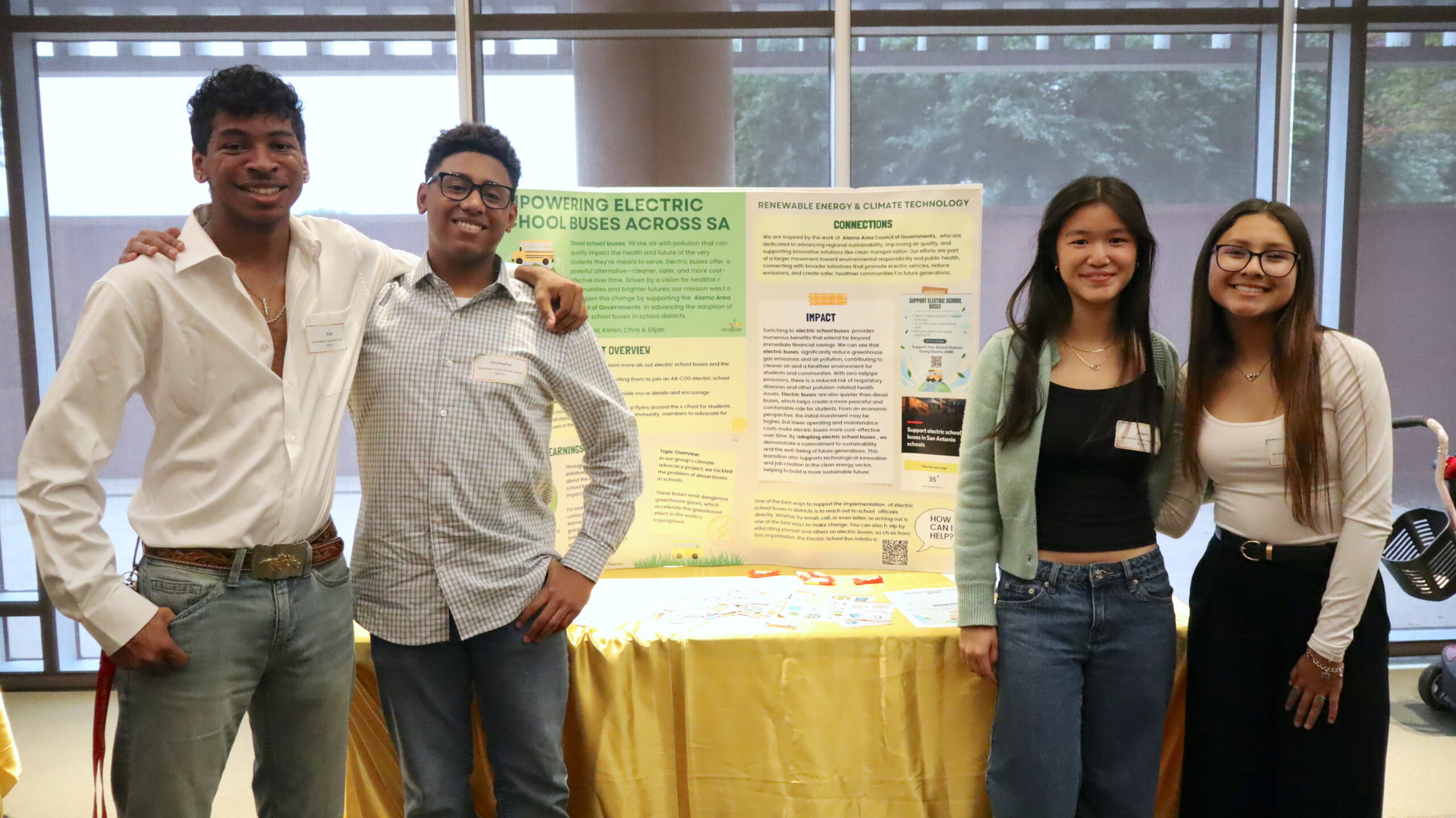
⚡️ Making the Case for Electric School Buses
The Renewable Energy & Climate Technology team took aim at one of the most visible but overlooked sources of air pollution in school communities: diesel buses. Working in partnership with the Alamo Area Council of Governments (AACOG), the team contacted three San Antonio school districts, invited them to participate in an AACOG electric school bus training session, and distributed informational flyers to encourage district leaders to act. They also hung awareness materials at their school and launched a community petition advocating for the transition to electric buses. Through their conversations with AACOG, the team learned that grants and other funding resources are already available to help districts manage the upfront cost of switching, making the barrier to change smaller than many assume.
This year’s team:
Eli (he/him), 15 · Chris (he/him), 15 · Angela (she/her), 17 · Karen (she/her), 16
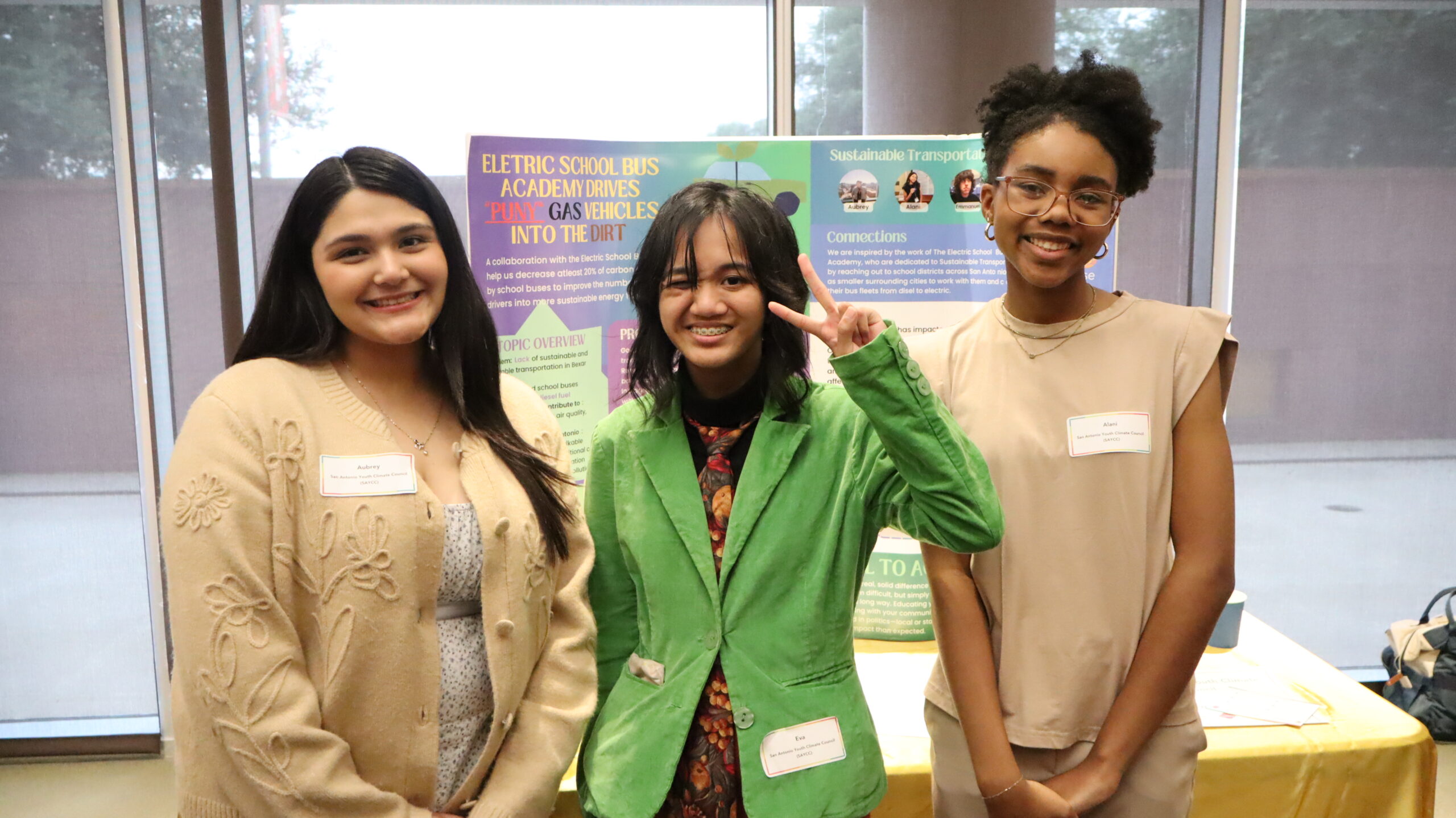
🚌 Building Awareness for Cleaner Transit
Focused on the broader challenge of diesel-dependent transportation across Bexar County, the Sustainable Transportation & Mobility team partnered with the Electric School Bus Academy to build public awareness about cleaner transit options. The team created an Instagram page featuring research-backed posts drawn from public databases, tabled at community events, and visited EcoCentro to connect their work to local sustainability efforts already underway. Their research highlighted that electric school buses produce zero tailpipe emissions, are at least 32% more energy efficient than diesel buses, and are ultimately cheaper to operate over time, findings they shared with followers and community members throughout the year.
This year’s team:
Aubrey (she/her), 17 · Eva (she/he), 17 · Alani (she/her), 14 · Manny A. (any), 15 (not pictured) · Rozita (she/her), 17 (not pictured)
🌽 Getting Students Into School Garden
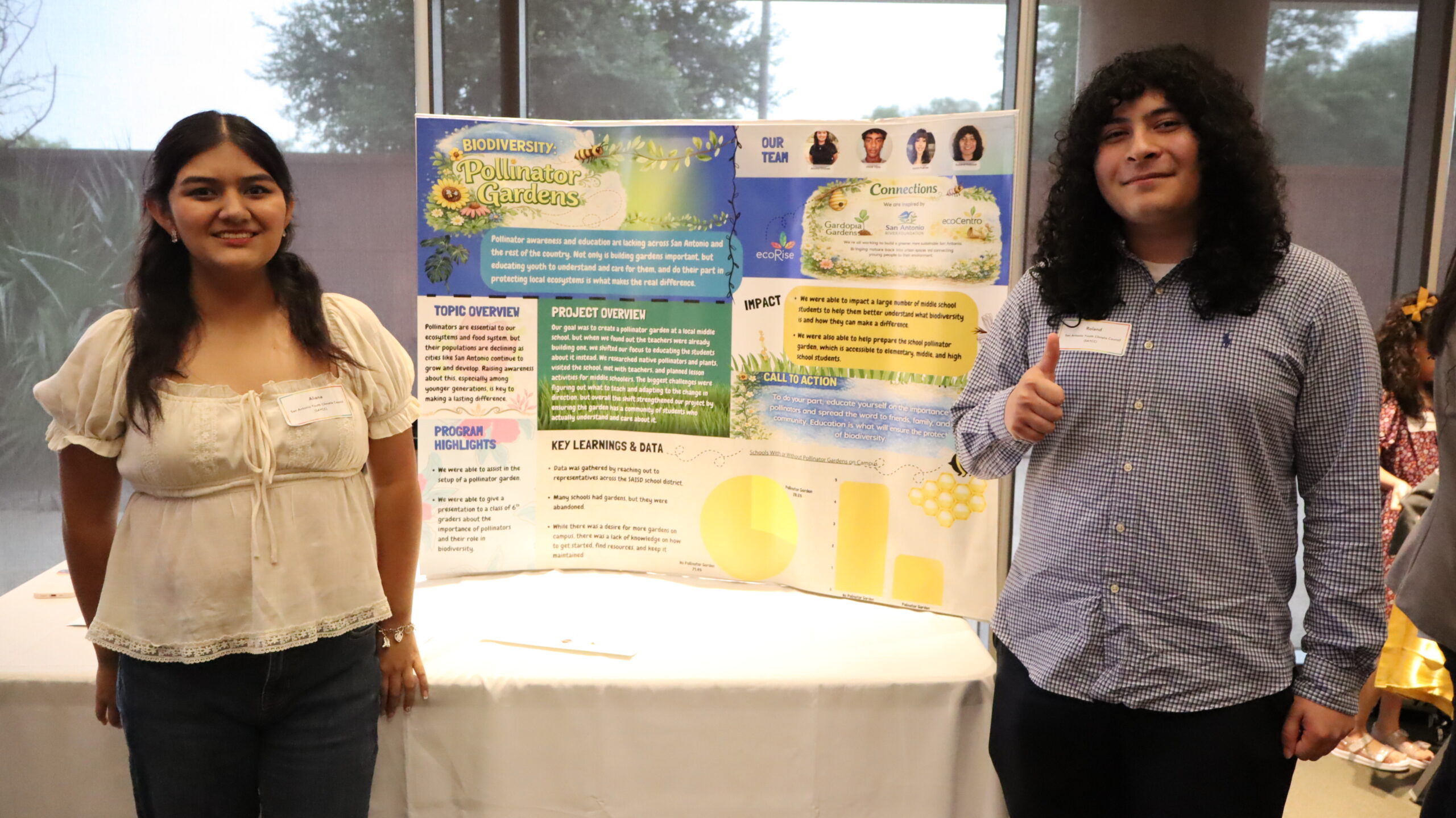
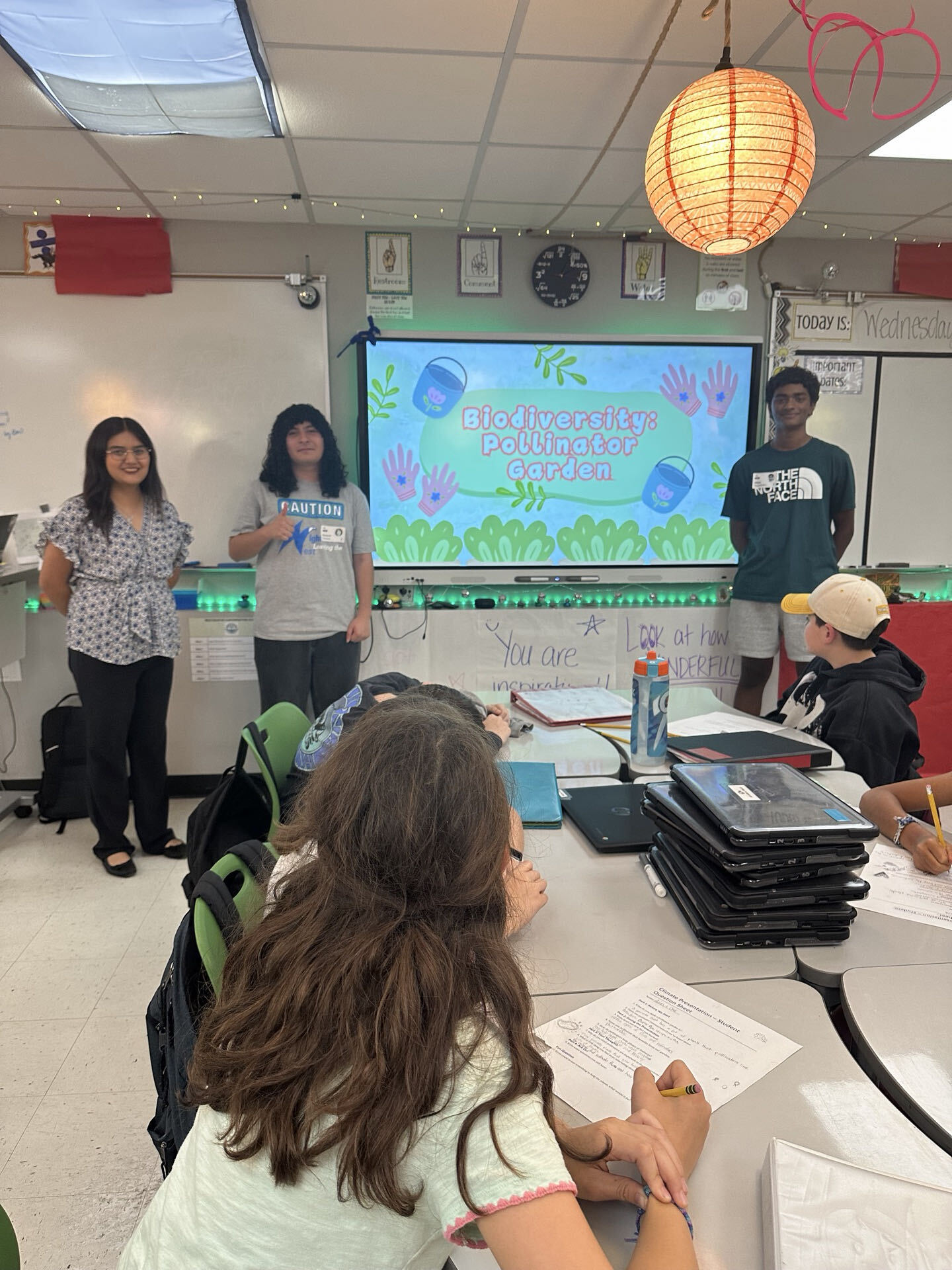
When the Biodiversity & Ecosystem Conservation team arrived at a local middle school ready to build a pollinator garden, they discovered teachers had already broken ground on one. Rather than redirecting their energy elsewhere, the team pivoted to focus on something the garden still needed: students who actually understood why it mattered. The team researched native pollinators and plants, visited the school, collaborated with teachers, and designed lesson activities for sixth graders to build ecological literacy from the ground up. They also helped prepare the garden itself, which is now accessible to elementary, middle, and high school students. Their outreach with San Antonio ISD revealed that while many schools have gardens on campus, most have been abandoned, making both the garden and the education surrounding it that much more meaningful.
This year’s team:
Aliana (she/her), 16 · Roland (he/him), 17 · Vikas (he/him), 16 (not pictured in photo 1) · Sarahi (she/her), 17 (not pictured)
🌳 Making Xeriscaping Accessible in San Antonio Neighborhoods
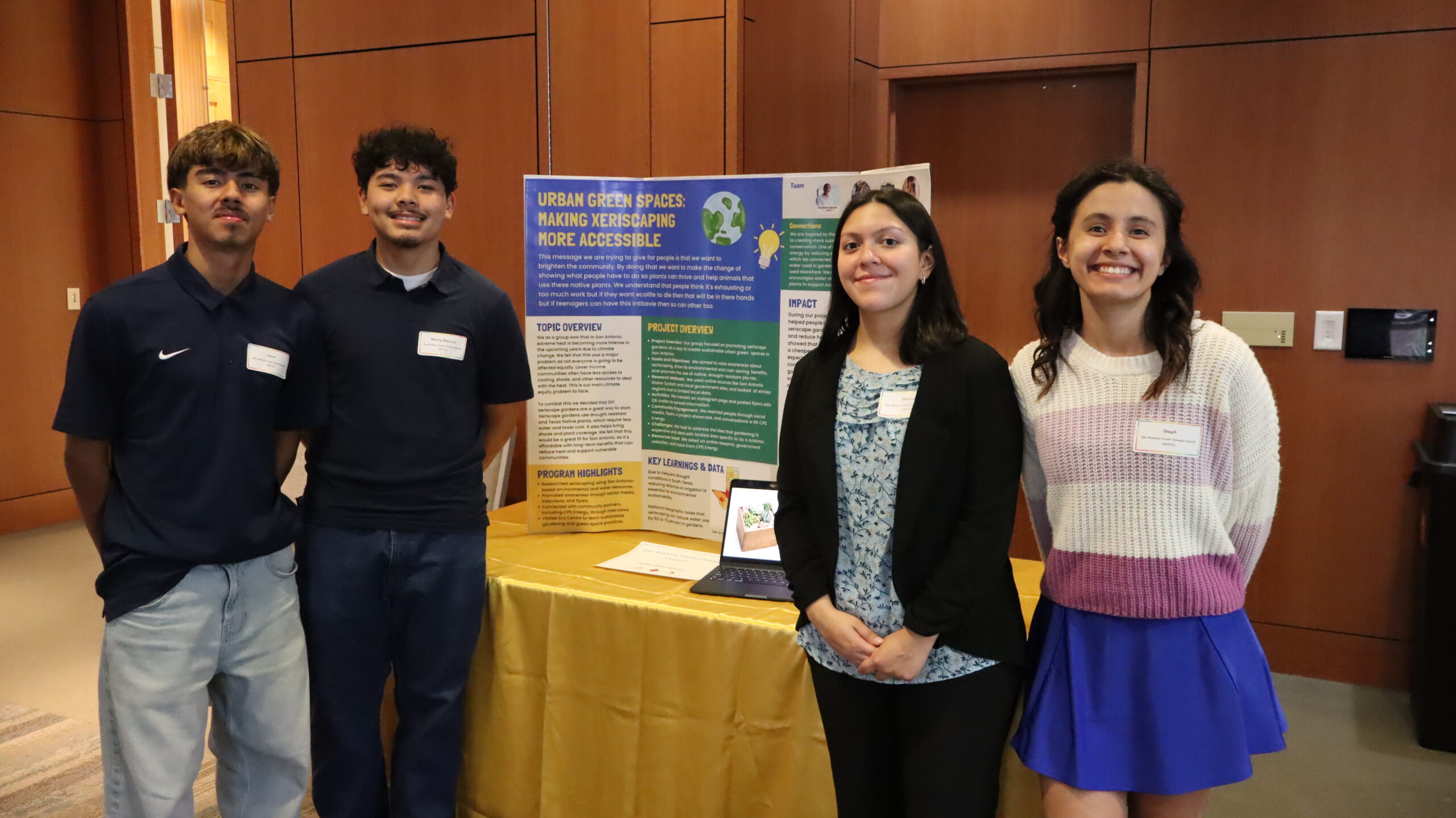
With San Antonio summers intensifying and heat hitting lower-income communities hardest, the Urban Green Spaces team focused on a practical, community-centered solution: xeriscaping. Using drought-resistant, Texas-native plants that require less water and lower maintenance costs, xeriscape gardens offer a way to bring shade and green coverage to neighborhoods that often lack both. The team promoted xeriscaping through social media (check out their Instagram, @project_urbanxeriscape), distributed flyers with QR codes, connected with CPS Energy through interviews, and visited EcoCentro to learn hands-on sustainable gardening practices. Their work challenged the common perception that gardening is expensive, positioning xeriscaping as an accessible entry point for families and communities working with limited resources. The team also drew on data from the San Antonio Water System to ground their research in local context.
This year’s team:
Josue (he/him), 15 · Manny L. (he/him), 17 · Marlene (she/her), 16 · Steph (she/her), 18
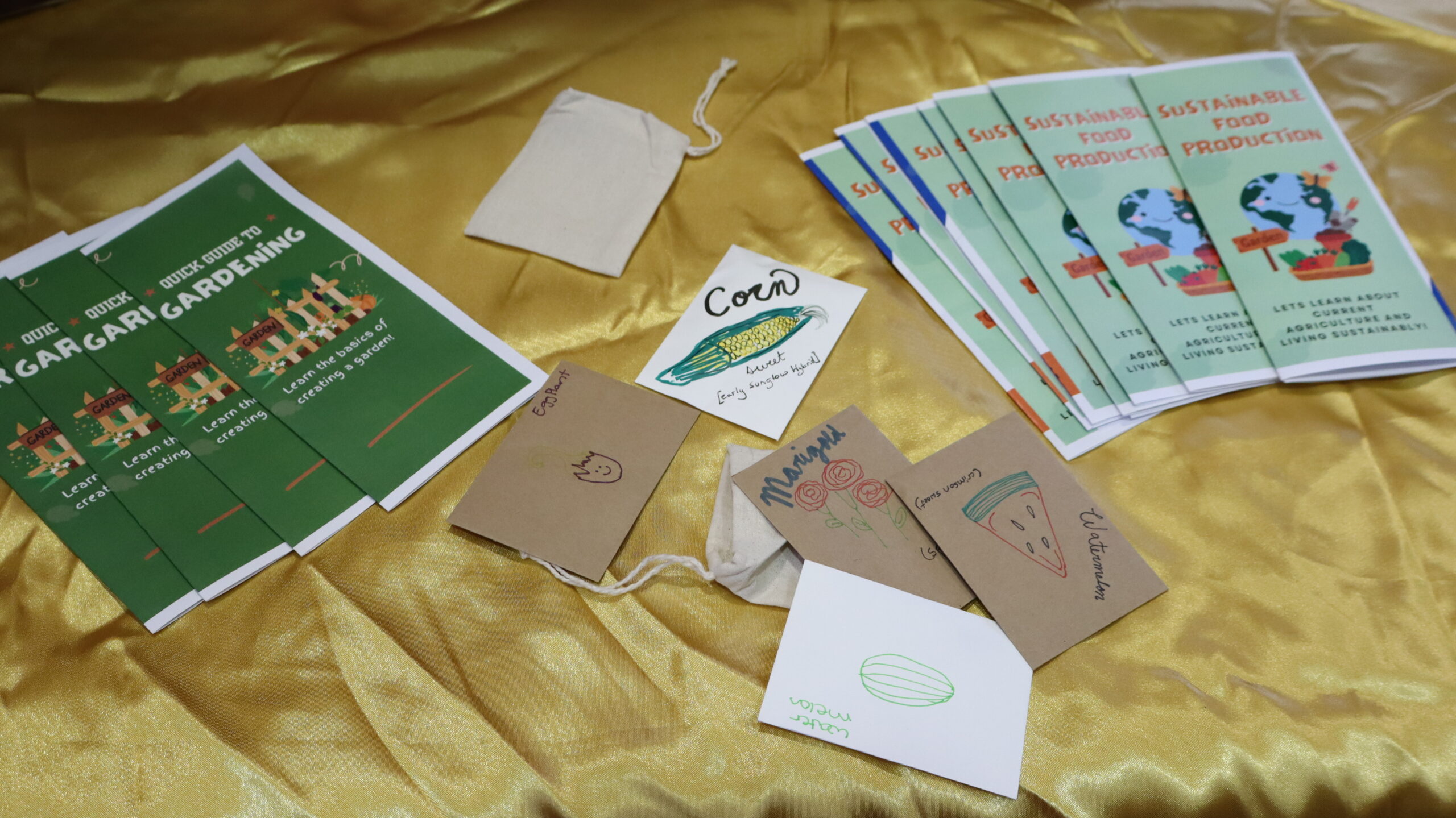
🌱 Seed Kits, Community Gardens, and the Next Generation of Growers
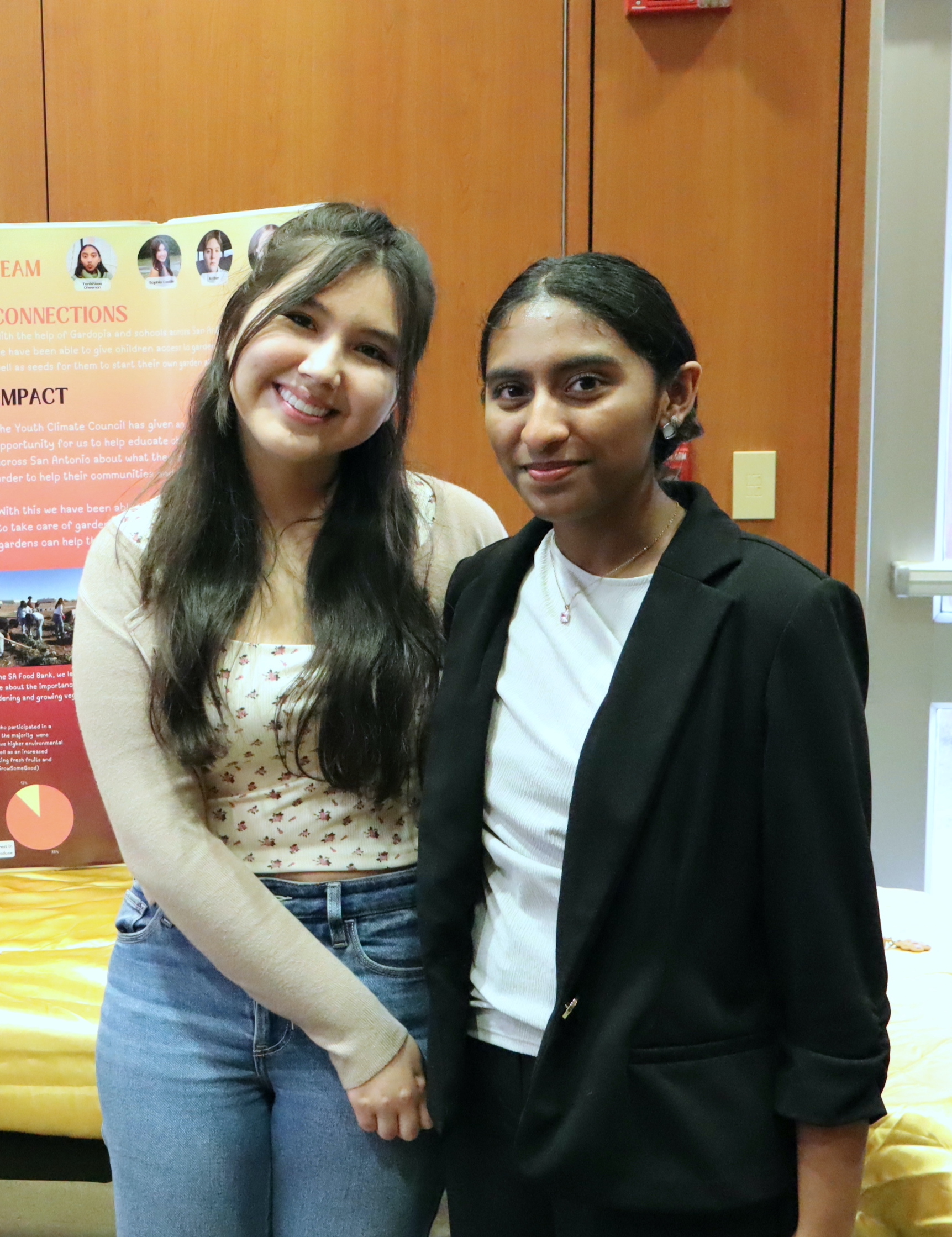
The Community Health & Resilience team focused their project on getting children outside, into the soil, and connected to where food comes from. Partnering with Gardopia Gardens, the team invited elementary school students to a hands-on workshop in a community garden, teaching them about sustainable farming and sending each student home with a seed kit to start a garden of their own. The team also visited the San Antonio Food Bank to learn about food growing and access, The Well at Tecolote to explore sustainable practices and the history of the land, and EcoCentro to understand how natural disasters intersect with resource scarcity. Their research found that students who participate in school gardens show higher environmental awareness and increased interest in eating fresh produce, evidence that the earliest interventions can plant the longest-lasting seeds.
This year’s team:
Sophia (she/her), 17 · Tanishkaa (she/her), 16 · Ari (he/him), 18 (not pictured) · Sarah (she/her), 15 (not pictured)
Carrying the Plan Forward
By the end of the year, seven teams had turned a school year of learning into something San Antonio could actually use. A team that started the year unsure what a resilience hub even was ended it running an Instagram page residents now follow for emergency prep tips. Another spent the spring teaching sixth graders why the pollinator garden behind their school actually mattered, then helped finish building it. In post-program surveys, 100% of council members reported growing professionally, and 97% said the experience increased their ability to take action on climate issues.
In May, Council members brought their year’s work to the 8th Annual San Antonio Student Innovation Showcase, distributing seeds and growing guides, walking attendees through transportation and energy research, and discussing emergency preparedness with community members. Teams working on sustainable transportation and renewable energy demonstrated a strong command of difficult policy terrain and translated it into proposals their city can actually use.
“Ultimately, I learned never to give up or into the negativity… the Council has equipped me with tools to handle it. I learned about climate resilience, and it has helped me understand what I can do for myself and my community.”
25–26 San Antonio Council Member
That learning came into full view at the 10th Annual Student Innovation Showcase at Austin City Hall, where Council members presented a year’s worth of work to peers, partners, and community members. Elijah Scott spoke on behalf of the Council, reflecting on the connections formed and the sense of ownership that comes from doing real work alongside real organizations.

 This year’s Council was shaped by the students who showed up, asked hard questions, and kept pushing. We’re grateful to the City of San Antonio Office of Resilience & Sustainability and the Wayne Hollomon Price Foundation for their continued partnership and to every organization that opened their work to this cohort. Six council members will continue that work this summer through EcoRise’s paid Green Career Internships.
To learn more about EcoRise’s youth leadership programs or get involved, visit ecorise.org/youth-climate-council or reach out to youthprograms@ecorise.org. Follow the Council’s work at @ecorise_youth on Instagram, and support next year’s projects at ecorise.org/donate.